


Programs, Seminars & Lectures
Cultivating The Surviving Object
September -- December, 2023
- Co-sponsored by the Pennsylvania Society for Clinical Social Work and the Philadelphia Psychotherapy Study Center, an affiliate chapter of the International Psychotherapy Institute, Washington, DC
- 8 meetings, 20 CE hours
September - December, 2023 - Wednesday: The Wednesday seminar will be led by Paul Koehler, LCSW, and will meet at the office of Pat Duffy, LCSW, 8200 Flourtown Ave., Suite 1-A, Wyndmoor, PA l9038, from 9:15 – 11:45 on the following Wednesday mornings:
September 6 & 20
October 4 & 18
November 1, 15 & 29
December 13
- Fridays: The Friday seminar will be led by Karen Fraley, LCSW, and Paul Koehler, LCSW, and will meet via zoom from 9:15 – 11:45 on the following Friday mornings:
September 15 & 29
October 6 & 20
November 3 & 17
December 1 & 15
This seminar will be structured around the careful reading and study of Jan Abram’s recent book, The Surviving Object. This book offers a synthesis of Winnicott’s theories of human development and a careful explication of his late paper, “The Use of an Object and Relating through identification”. We will consider the importance for the infant of the primary object’s capacity to “survive” the impacts of the infant’s aggression and hostility, the consequences for development when that survival is compromised, and the manifestations of those events and dynamics in the crucible of the clinical encounter.
In addition to lecture and discussion of the readings, participants will be invited to share relevant case material.
COURSE SYLLABUS AND OBJECTIVES:
-
1) Chapter 1 – “Squiggles, Clowns and Catherine Wheels”
-
1. Participants will describe and elaborate Winnicott’s theory of the incommunicado self.
2. Participants will describe and elaborate how early impingements and inadequate containment affect the development of the self.
2) Chapter 2 – "The Surviving Object"
- 1. Participants will describe and elaborate Winnicot's emphasis on the infant's initial sense of helplessness as preceding the effects of psychosexuality and instinct.
2. Participants will describe and elaborate Winnicott's theory of primary creativity as an essential element in the infant's capacity to integrate good and bad experience.
3) Chapter 3 – "The Non-surviving Object"
- 1. Participants will describe and elaborate the affect of terror as a sign and a consequence of the internalization of a non-surviving object.
2. Participants will identify and describe the presence and influence of a non-surviving object in the case material in the chapter and also in shared case material.
4) Chapter 4 – "The Fear of WOMAN/Analyst"
- 1. Participants will describe and elaborate how the presence of a non-surviving object negates the emergence of desire.
2. Participants will describe and elaborate how when early dependence needs are not met sufficiently, this can lead to a fear and hatred of dependence itself and a consequent fear and hatred of women generally and of the therapeutic process itself.
5) Chapter 5 – "On Winnicott's Clinical Innovations in the Analysis of Adults"
- 1. Participants will describe and elaborate how Winnicott's clinical innovations grew out of his understanding of and reliance on classical technique.
2. Participants will describe and elaborate the differences and similarities between Winnicott's concept of the freezing of early trauma and Freud's concept of fixation.
6) Chapter 6 – "Winnicott's Area of Formlessness"
- 1. Participants will describe and elaborate Winnicott's idea that psychic development starts with an emphasis on formlessness.
2. Participants will describe and elaborate how the paternal element exists initially in the mind of the mother and functions to give beginning form to formlessness.
7) Chapter 7 – "The Paternal Integrate"
- 1. Participants will describe and elaborate how the mother's internal representation of the father affects the development of the child.
2. Participants will describe and elaborate how the paternal integrate functions in the mind of the analyst or therapist when engaging the patient.
8) Chapter 8 – "Fear of Madness"
- 1. Participants will describe and elaborate Winnicott's theory of the fear of breakdown as the fear of a repetition of early psychic trauma.
2. Participants will describe and elaborate how a negative therapeutic reaction can defend against the fear of re-experiencing of early trauma.
SEMINAR LEADERS:
-
Karen Fraley, LCSW, BCD, is in private practice in Exton, PA, providing psychoanalytic psychotherapy for individuals and couples. She holds a certification in Object Relations Therapy from the International Psychotherapy Institute. She is an active faculty member of IPI and a Fellow member of PSCSW.
Paul Koehler, LCSW, is a Fellow of PSCSW. He is a graduate of the Institute for Psychoanalytic Psychotherapies and of the Washington School of Psychiatry's Object Relations Training Program. Paul is a faculty member of the Greater Kansas City Psychoanalytic Institute. He is in private practice in Doylestown, PA.
CONTINUING EDUCATION CREDITS:
For Pennsylvania Social Workers, Marriage and Family Therapists, and Professional Counselors, this program is approved for professional workshop sponsored by the Pennsylvania Society for Clinical Social Work, a state affiliate of the Clinical Social Work Association, listed in Section 47.36 of the PA State Board of Social Work Examiners. This program is also approved for professional workshop for marriage and family therapists (Section 48.36) and professional counselors (Section 49.36).
For New Jersey Social Workers: this program is approved for 20 credits. Programs approved for credit by boards that license social workers in other states are a valid source of continuing education credits.
For psychologists Friday seminar only): the International Psychotherapy Institute is approved by the American Psychological Association to offer continuing education credit for psychologists. IPI maintains responsibility for this program.
For further information and/or to enroll please contact us:
Paul Koehler: pmkmsw@gmail.com
Karen Fraley: kfraley55@icloud.com

The Wizard of Oz Teaches Object Relations Theory
- Date: TBA
- Time: TBA
- Fee: TBA
- Location: TBA
- Instructor: Charles Ashbach, Ph.D.
This program is a 2 session seminar using the film of The Wizard of Oz to present the essential elements of an object relations understanding of the psyche. Contents include a detailed discussion of psychic structure, from a Kleinian perspective, as well as the problems of innocence, guilt, Oedipal conflict and trauma. The group will utilize clinical case material to exemplify the application of object relations theory.
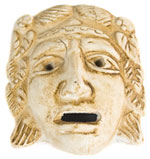
Oedipus
- Date: TBA
- Time: TBA
- Fee: TBA
- Location: TBA
- Instructor: Charles Ashbach, Ph.D.
This is a 3 seminar program involving the reading of Sophocles' drama: Oedipus Rex. The goal is to understand the relational context that gives rise to the conflicts between the generations and the sexes. We will explore the "back-story" of the myth, and the role of parental aggression and its link to the impulses and fantasies of the child.
The Oedipus complex occupies a central place in psychoanalytic thought and we'll contemplate the complexities of the story, and point to the issues that arise in the clinical encounter. Clinical case material will be utilized from the members to demonstrate therapeutic implications.
Suffering, Sacrifice and Psychotherapy
- Date: TBA
- Time: TBA
- Fee: TBA
- Location: TBA
- Instructor:Charles Ashbach, Karen Fraley, and Paul Koehler
A 6-part seminar series that explores linkages between the practice of psychotherapy and the multiple burdens of suffering, sacrifice, and masochism that constitute much of the profession. The connection between the Greek concept "Therapon" meaning servant or slave, and the role of the therapist will be explored in depth.
Clinical concepts of holding and containment; of counter-transference and acting-in will all be explored through in-depth clinical examples.
Seminars

Foundations of Western Literature
- Date: Begining January 2011
- Time: Sunday evenings 7-9pm (monthly)
- Fee: $450
- Location: Chestnut Hill, PA
- Instructors: Charles Ashbach, Karen Fraley, and Paul Koehler
This will be an on-going seminar which will meet monthly to discuss and study the great works of Western literature. The seminar will meet on Sunday nights, 10 meetings per year, beginning in September, 2010.
Goals of this seminar include:
- To gain an understanding of unconscious process and how they relate to the study of these enduring works.
- To appreciate the elegance and wisdom in these works of literature -- and explore the possibilities, parameters, and paradoxes as they relate to the human condition.
- We will begin with the Epic of Gilgamesh, and will next move on to the study and reading of the Iliad and the Odyssey. These reading choices will likely be enough to occupy us for the first year of our study.
We anticipate that we will continue the following years to come by reading:
- The major plays of Sophocles
- The Aeneid of Virgil
- Beowulf
- Sir Gawain and the Green Knight
- Dante's Divine Comedy
- Milton's Paradise Lost
- The major plays of Shakespeare
- Goethe's Faust
We will go on to read works by Melville, Dostoevsky, Tolstoy, William Butler Yeats, James Joyce, and Camus.


